


I found Smoothie King most useful when I treated it as a practical ordering companion rather than as an app I would open for entertainment. It belongs to the Food & Drink category, and its purpose is straightforward: help me browse the menu, place an order ahead, and arrange delivery when that option is available for my location. That narrow focus is also its strongest quality. I do not have to dig through a general restaurant platform to find Smoothie King items or repeat the same choices at the counter.
The app is free, and Smoothie King Franchises, Inc. is the developer behind it. Its store summary points to ordering ahead, delivery, and an interactive menu, but my impression after using it is that the real test is not whether those functions exist. The important question is whether they remain useful after the first few visits, when the novelty of having a dedicated app has worn off. For me, the answer is mostly yes, especially if I already buy smoothies from the chain often enough to benefit from a saved ordering routine.
How Smoothie King fits into a regular routine
The first week feels simple and purposeful
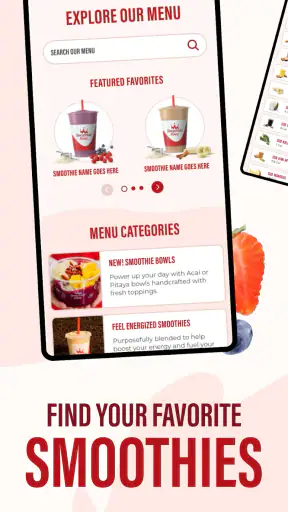
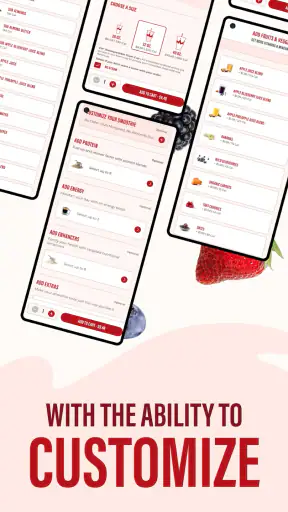
The initial appeal comes from reducing small decisions. Instead of arriving at a busy store and trying to read the menu while people wait behind me, I can look through the choices in advance. That makes the app particularly convenient for a rushed morning, a quick lunch replacement, or an afternoon stop when I already know roughly what I want. The interactive menu is more useful than a static list because it gives the browsing process a sense of progression: I can explore, choose, review, and then decide whether ordering ahead is worth it.
I also like the difference between planning and impulse ordering. At the counter, I may choose the first familiar smoothie I recognize. On the phone, I have more time to compare the menu and think about the size or style of drink that suits the occasion. This does not make the app revolutionary, but it does make it easier to avoid ordering something merely because the line is moving quickly.
A realistic example is a weekday when I am leaving home later than planned. I can open the app, check the available menu, place the order before I leave, and collect it on the way if the selected store supports that workflow. The benefit is not just saving a few moments at the register. It is being able to fit the purchase into a schedule without adding another uncertain stop. That is the kind of convenience that can turn a dedicated restaurant app from a novelty into a habit.
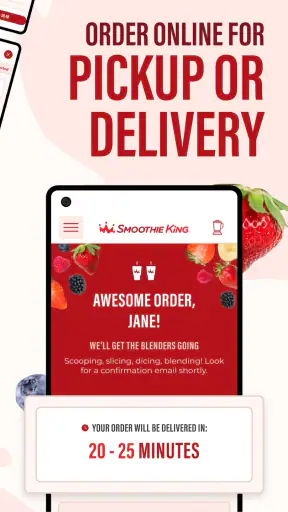
Delivery gives the app a second role. If I am working from home or cannot easily reach a store, I can use the same place to investigate whether delivery makes sense for me. I would still check the final order carefully before confirming, because delivery can be less predictable than pickup and may not suit a drink that I want immediately. For someone who values convenience over the lowest possible total cost, that trade-off may be acceptable. For a person already passing a store, ordering ahead is usually the more sensible use.
The interactive menu is better for decisions than for browsing endlessly
The menu works best when I approach it with a purpose. I can use it to find a familiar drink quickly, but I can also use it when I want to change my routine without standing in front of the cashier. That makes the app helpful for people who need a little extra time to decide or who prefer to review food and drink choices privately.
One less obvious advantage is that digital browsing can expose me to options I might overlook in a physical menu. That is valuable when I am tired of ordering the same thing, but it also creates a small risk: too much browsing can make a simple purchase feel like a longer task. I recommend opening the menu before hunger or time pressure takes over, then narrowing the choice instead of scrolling without a plan.
The app is also a better fit for repeat orders than for someone who visits Smoothie King only once. A first-time customer may appreciate seeing the menu in a calm setting, but the lasting benefit comes from reducing repeated effort. Once I know which drink I want, the dedicated ordering path becomes much more useful than searching again through a general delivery service.
What the early experience does not solve
A dedicated app cannot remove every part of the restaurant experience. I still need to choose the correct store, pay attention to the order details, and allow enough time for preparation or delivery. Ordering ahead is not the same as instant service, and I would not use it as a guarantee that a drink will be ready at the exact moment I arrive. It is a planning tool, not a way to eliminate all waiting.
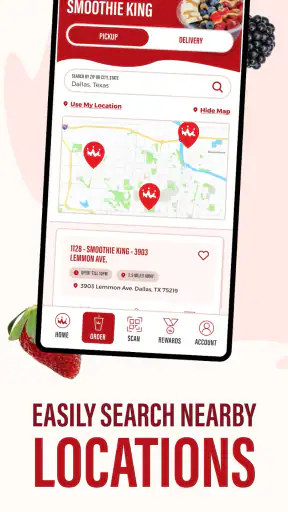
That distinction matters for commuters. If I am already walking past a Smoothie King location, using the app may save a little interaction but add the time needed to place the order. If the store is quiet, ordering in person can be just as quick. The strongest case is when I expect a line, need to coordinate a pickup, or want to place the order before reaching the store.
Value after the first month
After the first few weeks, the question changes from “Is this convenient?” to “Do I use it often enough?” The app earns its place when it becomes part of a repeatable pattern: opening it before a commute, checking the menu before a break, or arranging a pickup for a household member. If I only visit occasionally, the extra app on my phone may not offer enough continuing value over ordering at the counter.
The free price helps with that decision. There is no purchase barrier to trying it, so I can judge it by convenience rather than by whether the app itself feels worth paying for. Its audience size also suggests that it has reached a broad customer base, with over a million installs. I read that as evidence of practical demand rather than proof that every user will need it regularly.
The store listing shows a 4.9 average from around twenty thousand ratings, along with roughly five thousand written reviews. Those figures indicate a very positive reception, but ratings do not replace personal fit. A customer who frequently orders from Smoothie King may find the app indispensable, while someone who prefers spontaneous visits may barely notice the difference. I would use the high rating as encouragement to try it, not as a reason to ignore my own ordering habits.
Month-to-month value also depends on whether the app makes repeat behavior easier without making me think too much. If I have to repeatedly search for a store, rebuild an order, or reconsider the same menu choices, the advantage shrinks. If the process feels familiar after a few visits, the app becomes a small but useful piece of routine maintenance: open it, make the choice, review it, and move on.
Who benefits most from keeping it installed
I think the best long-term users fall into a few clear groups. Regular Smoothie King customers benefit because ordering ahead can reduce friction on every visit. People with predictable breaks benefit because they can place an order before their available time disappears. Families or coworkers may also find it useful when one person can organize a pickup instead of having several people decide at the counter.
It is also a good match for anyone who dislikes making menu decisions under pressure. The interactive menu gives me room to compare options before committing. That is a small accessibility advantage in everyday terms: I can take my time, rather than trying to hear and remember choices while a line forms behind me.
On the other hand, I would skip installing it if I rarely buy from this chain, generally prefer independent smoothie shops, or already use a delivery service for nearly every restaurant order. A general platform may be better when I want to compare several restaurants in one place. The dedicated app wins when Smoothie King itself is the destination and I care about a direct ordering workflow.
Maintenance is light, but attention is still required
The main maintenance burden is not technical complexity; it is remembering to use the app at the right moment. If I wait until I am already at the store, the advantage of ordering ahead is reduced. The habit works best when I make the app part of the decision before leaving home, before starting a break, or while I am still deciding what to eat.
I would also review the order summary carefully instead of tapping through automatically. Digital ordering makes it easy to move quickly, but speed can hide a wrong store selection or an unintended menu choice. A ten-second check is worthwhile, particularly when I am ordering for someone else or arranging delivery to a location that is not my usual one.
Another practical habit is to use the menu as a planning tool rather than opening it only when I am already hungry. Looking earlier gives me time to decide whether pickup or delivery fits the day. It also prevents the app from becoming associated with rushed choices and disappointment. In my experience, the best restaurant apps are not the ones I use constantly; they are the ones I open at exactly the right stage of a plan.
The current version is 7.0.0, and the app supports devices running iOS 7.1 or later. That broad operating-system requirement makes it approachable for people using older compatible devices, although the experience can still vary with the phone and operating system in everyday use. I would keep the app updated when updates are available, not because I expect dramatic changes every time, but because ordering tools need to remain dependable when I actually need them.
Where routine fatigue begins
The first source of fatigue is repetition. If I always order the same smoothie and visit at the same time, the app can feel like an extra step unless ordering ahead genuinely saves me a wait. A dedicated app needs to earn its place through convenience, not simply through having a branded icon on the home screen.
The second is uncertainty around timing. Pickup and delivery are useful concepts, but the value depends on the store, the moment, and my schedule. If I need a drink immediately, waiting for an order process may be less convenient than walking in. If I need a precise delivery time, I would be cautious about building an important appointment around it. The app helps coordinate an order; it does not turn a restaurant into a perfectly timed logistics service.
Menu browsing can also become tiring when I am looking for something very specific but do not know which choice will satisfy me. The interactive format encourages exploration, yet it does not replace personal knowledge of taste, appetite, or dietary needs. I would use it to inspect available choices, then rely on my own preferences rather than assuming the app can make the decision for me.
There is a broader trade-off with dedicated restaurant apps too. Keeping several brand apps installed can clutter a phone and divide ordering history across different places. A general delivery app is often more convenient for comparing restaurants, while Smoothie King’s own app is more focused. I would keep this one only if that focus repeatedly saves me time.
Age rating and everyday suitability
The content rating is Everyone, which matches the straightforward nature of the service. I would consider it suitable for ordinary household use, though younger users may still need an adult to handle payment, delivery details, or the final order decision. The rating describes the app’s content, not who should independently place food orders.
For adults, the more important suitability question is whether the ordering method fits their routine. Someone who enjoys speaking with staff and choosing spontaneously may find the app unnecessary. Someone who wants a quieter, more controlled way to review the menu may appreciate it immediately. Neither preference is wrong; the app is valuable because it removes a particular kind of friction, not because it replaces every way of buying a smoothie.
My long-term verdict
After the novelty fades, Smoothie King remains worthwhile for repeat customers who use order-ahead or delivery as part of a predictable routine. The app’s lasting value is modest but real: it puts the menu and ordering process in one focused place, reduces counter interaction, and can make a planned pickup easier to fit into a busy day. I would not describe it as essential for everyone, but I would recommend trying it if Smoothie King is already one of your regular stops.
My strongest recommendation is to test it against one real habit rather than judging it abstractly. Use it before a busy commute, during a short work break, or when coordinating a pickup for more than one person. If the process saves effort in that situation, repeat it. If ordering in person remains faster and more natural, there is no reason to force the app into your routine.
My final view is that this is a useful habit app, not a must-have app. It earns lasting space when its focused menu and ordering tools solve a recurring problem. It deserves less attention from occasional visitors who already have a preferred alternative. As a free Food & Drink app from Smoothie King Franchises, Inc., it delivers enough practical value to keep installed for regular customers, provided they remember that convenience comes from planning ahead, checking the order, and choosing the right moment to use it.


